
Bad Bunny Turns the World Into His Casita With Triumphant Super Bowl LX Halftime Performance: Critic’s Take

Trending on Billboard
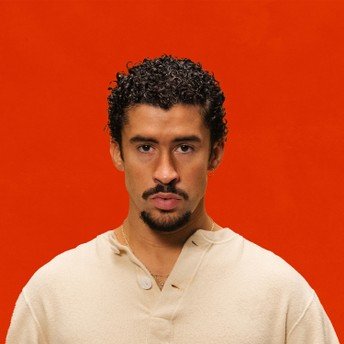
Few halftime shows had as much at stake while simultaneously having nothing really to lose than Bad Bunny‘s halftime performance at Super Bowl LX on Sunday (Feb. 8). On the one hand, the gig comes with all eyes on it — minus the likely comparatively small amount of those who tuned in to the alternate Turning Point USA halftime show — after the Puerto Rican superstar’s halftime selection was loudly decried by a select few reactionary pundits who probably couldn’t tell Karol G from Kenny G anyway. On the other hand, Bad Bunny has been on such a winning streak in just about every way possible over the past 13 months — including most literally at the Grammys last Sunday — that his gig on the world’s biggest stage came at a time when it really couldn’t do anything but further confirm his status as one of the world’s most globally dominating and beloved superstars.
Explore
See latest videos, charts and news
And indeed, Bad Bunny’s halftime performance showcased in spectacular fashion all the reasons he has become one of the greatest pop stars of his generation: a combination of meticulous design, brilliant creative instincts and universal messaging, tied together with a singular voice, an ineffable cool and some of the best hit songs (and deep cuts) of the past decade. And while he seemed happy to invite everyone to party with him at his casita, if you were one of those watching who still questioned his right to be there, he had some words and images for you as well.
The set’s visuals were explicitly Puerto Rican from the start, with Bad Bunny beginning the performance walking through a tall sugar cane field, rapping Un Verano Sin Ti smash “Titi Me Pregunto” amidst men playing dominoes, women doing their nails, vendors selling tacos and jewelry and even boxers squaring up against one another. From there, he transported viewers to the La Casita set that his No Me Quiero Ir De Aqui residency made a permanent part of his iconography, with celebrity attendees including Cardi B, Jessica Alba and Pedro Pascal. The staggering blink-and-you’ll-miss-it star power both demonstrated how Bad Bunny could get A-listers to show up as unidentified house guests, and ensured the big-name cameos wouldn’t end up being too distracting from the overall performance.
Getting far more screen time were Bad Bunny’s two musical guests — Lady Gaga performing a winningly salsafied version of her Bruno Mars smash duet “Die With a Smile” and Ricky Martin taking on his friend Benito’s heartbreaking Debí Tirar Más Fotos ballad “Lo Que Le Pasó a Hawaii” — and an unnamed couple who the superstar handed an engagement ring to at the beginning of his performance, and whose wedding and nuptials served as a throughline throughout. (While the reception that Bad Bunny tiptoed through while performing “Baile Inolvidable” was obviously staged, the wedding itself was reportedly real, giving the performance more of a local feeling and tangible vitality.) Both the camera and Bad Bunny himself moved nimbly enough throughout the packed proceedings that they felt impressively continuous and not overly theatrical, almost like a plausible day in the life of a performer who’s managed to maintain enough of an approachability during his ascent to global superstardom that he can still insist on being “a normal guy who makes music” without it eliciting worldwide eye-rolls.
But “normal guys” don’t usually find themselves at the middle of political firestorms the way Bad Bunny had since his announcement as the Super Bowl halftime headliner. And while he stopped short of making any specific callouts, his Puerto Rican pride was loud enough to be unmistakable in its pointedness: While “DtMF” would have been the predictable climax of the performance, given its quasi-title track and global smash status — including a likely big return to the Billboard Hot 100 next week due to renewed interest following his big Grammy night, which was even watched on TV by a family during the performance, while Bad Bunny handed one of his Gramophones to a young boy — Bad Bunny kept that song to a quick coda at performance’s end. Instead, he used the emotional peak of his set to spotlight “El Apagón” and “Café Con Ron,” two of the lowest-streamed songs from his two biggest albums (Verano and Fotos, respectively), but two extremely Puerto Rican anthems that made for an appropriate soundtrack to his waving his home territory’s flag, then offering his most powerful words of the night:
“God bless America… sea [be it] Chile, Argentina, Uruguay, Paraguay, Bolivia, Perú, Ecuador, Brazil, Colombia, Venezuela, Guyana, Panama, Costa Rica, Nicaragua, Honduras, El Salvador, Guatemala, Mexico, Cuba, República Dominicana, Jamaica… United States, Canada, and my motherland, mi barrio, Puerto Rico, seguimo aquí [we’re still here].””
Following that and the quick “Fotos” chorus run-through, he celebrated the performance’s culmination with a literal football spike — with a ball that read “Together, We Are America” — as the message “The only thing more powerful than hate is love” was displayed on the screen behind them.
Bad Bunny merely taking the world’s biggest stage would’ve been a political act in itself, as a Spanish-language, vocally pro-immigration world-famous artist in a time when ICE raids have become such a disturbingly omnipresent threat to American life that not even the Super Bowl itself felt safe. But to do so with such a joyous, celebratory performance that commemorated the biggest non-English-language artist of the century’s official arrival at the very highest tier of stateside stardom — and one that never let you forget for a minute where he came from, or what he was about, or who he was representing for — certainly felt like a statement that will resound for a long time, and as a defining moment in an already-historic career.
Did the message get to the people who really needed to hear it? Maybe not. Maybe they were too busy watching Kid Rock and Lee Greenwood, or loudly lambasting the performance as unworthy of the classic rock halftime performances of yesteryear to the rest of their Super Bowl parties, or just complaining about it on Twitter like the Commander-in-Chief. But maybe it reached a few. And if not, at least it confirmed to those who already agreed with it that their side was capable of producing much more exciting superstars, capable of throwing much, much better parties.